

How To Draw In Clip Studio Paint
How to draw manga in Prune Studio Paint
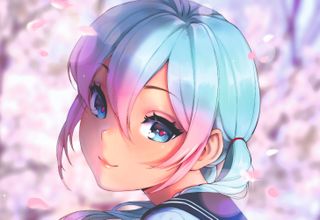
Learning how to draw manga isn't an easy thing to practice, especially when yous're staring at a bare canvas and the possibilities seem countless. Artists always feel excited nigh creating a new analogy, but with this joy comes many fears and a lot of self-doubtfulness. Apart from beingness unsure where to start, you tin ask yourself questions. Does your illustration look good? What else tin can you add together? Did you add too much? What if you alter this? (Our roundup of how to describe tutorials is besides certain to assistance.)
To aid you lot out, creative person Asia Ladowska has shared her artistic procedure forth with tips for how to draw manga. For this workshop, Ladowska created a character: Mai. This elementary name comes from the name of the calendar month she painted her in. Ladowska started this illustration in May 2020 and didn't open the file until May 2021, once she'd finally finished it. Follow Ladowska'southward process below and discover how to draw manga.
Want even more? See our tips on how to depict manga characters. And for new tools (including Prune Studio Pigment), hither's our pick of the best digital art software around.
How to depict manga
01. Choose an interesting bending
(Image: © Asia Ladowska)
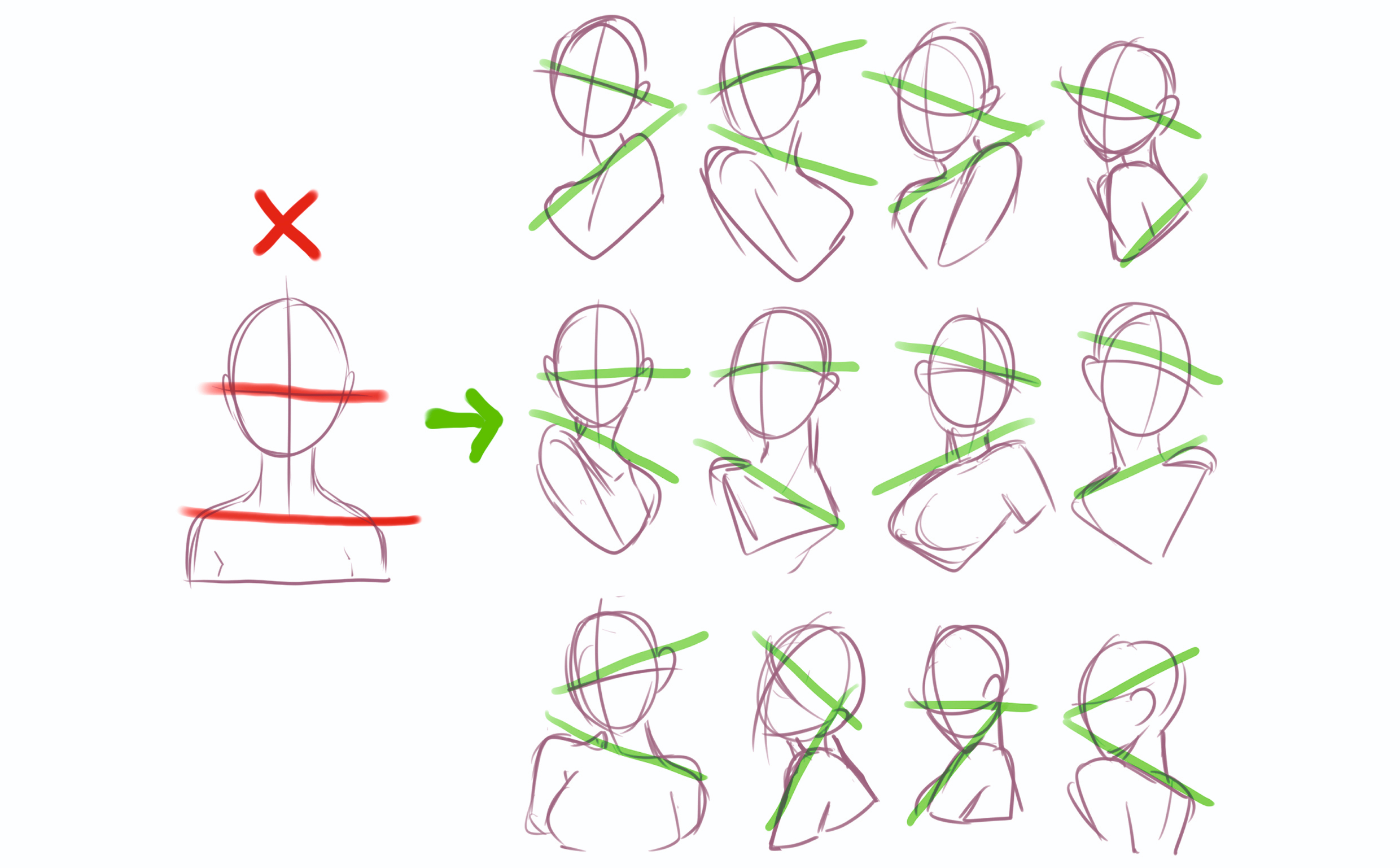
The most difficult angle to piece of work with when drawing a portrait is the frontal view. Information technology needs careful symmetry, rest and well-measured proportions, and when you put all of this together it looks a petty… irksome. I always struggle to brand frontal poses look interesting, and end up trying to second-guess myself. Even if I push button through the process, the result doesn't look very attractive. All the same, if you lot choose a slightly more dynamic angle then you'll be off to a good start!
02. Sketch quickly
(Image: © Asia Ladowska)
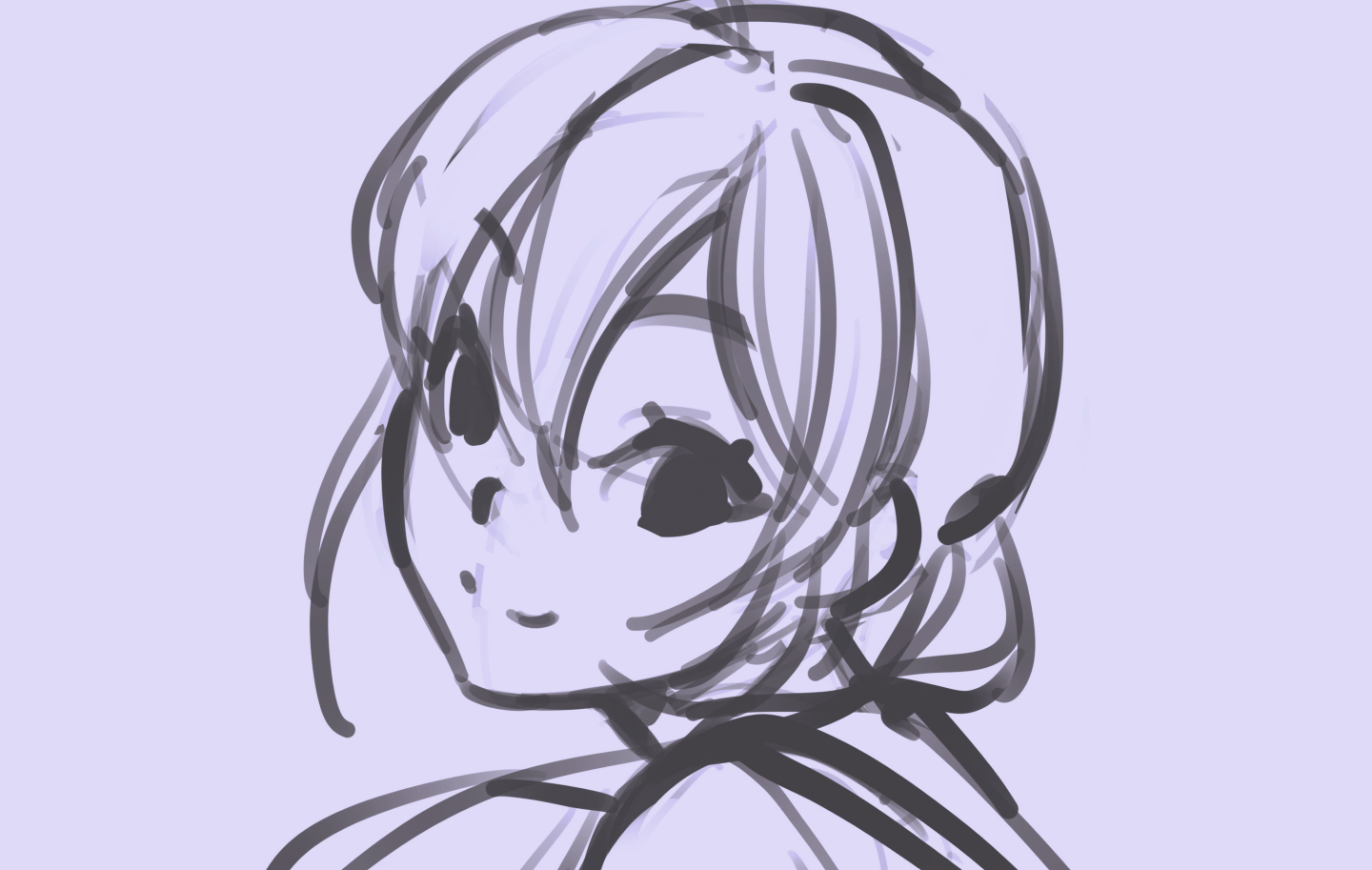
I e'er try to typhoon a sketch in nether 15 minutes. Allow'south face it – it'south merely a sketch. I need to visualise my thought before I forget it! My favourite tool to use in Prune Studio Paint is the Darker Pencil. It's good for sketches, line-art and even shading. I mainly employ the software'southward default brushes, but adjust their settings slightly. For the Darker Pencil I e'er untick the Suit by Speed option and modify Stabilization to effectually 15.
03. Colour your sketches
(Epitome: © Asia Ladowska)
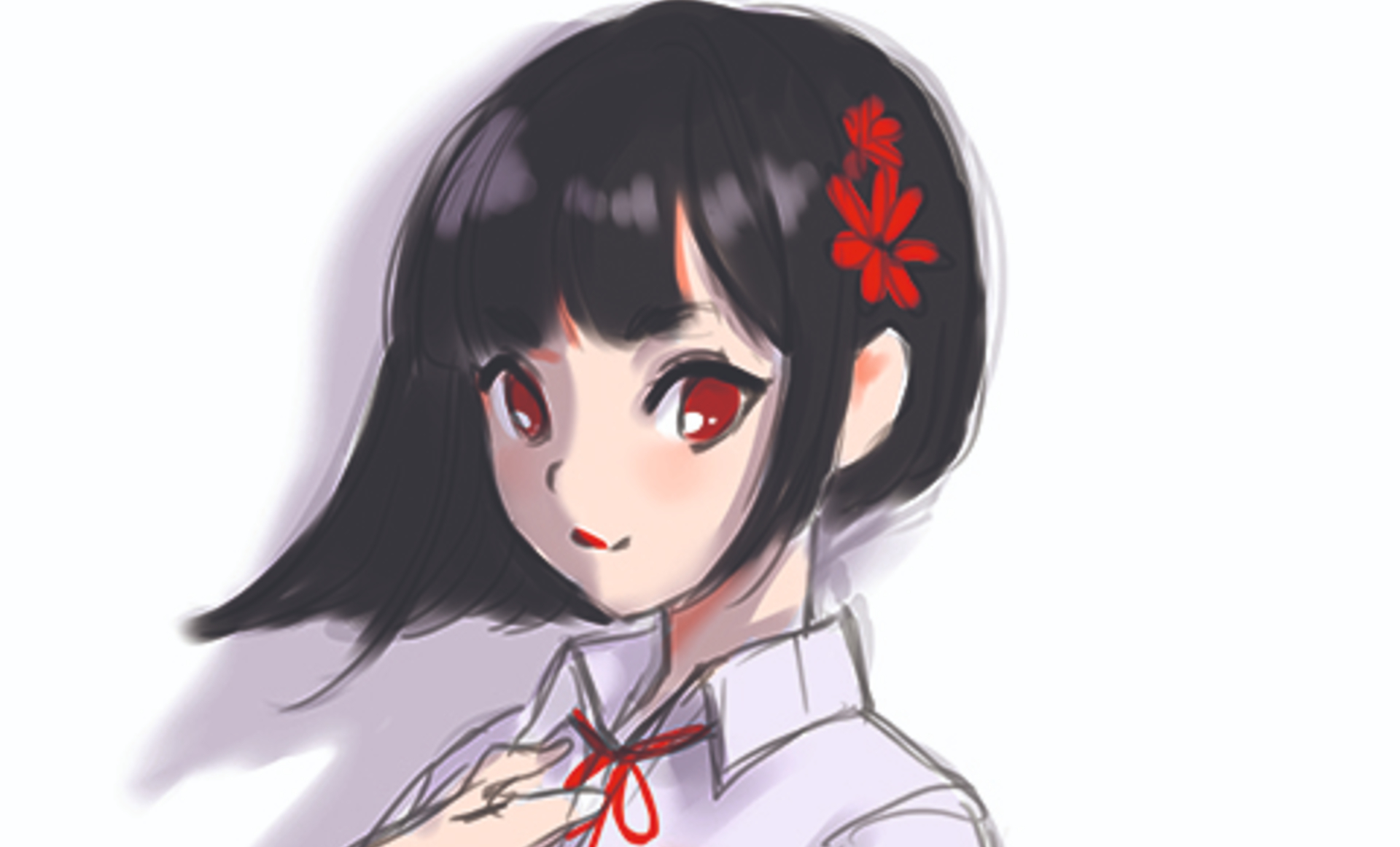
I usually add a splash of colour to my sketches at this stage to bring out the graphic symbol. Some mistakes tin can't be spotted when there are just lines in place (and on top of that, many messy lines!). It helps to see the illustration as a shape, and colours help to shape sketches. When you lot squint you tin can already encounter the character. For the lines of this sketch I used a night navy color rather than black, and when I changed the layer mode to Color Burn it resulted in cute hues that I can use subsequently for shading my character.
04. Don't rush the line-art
(Image: © Asia Ladowska)
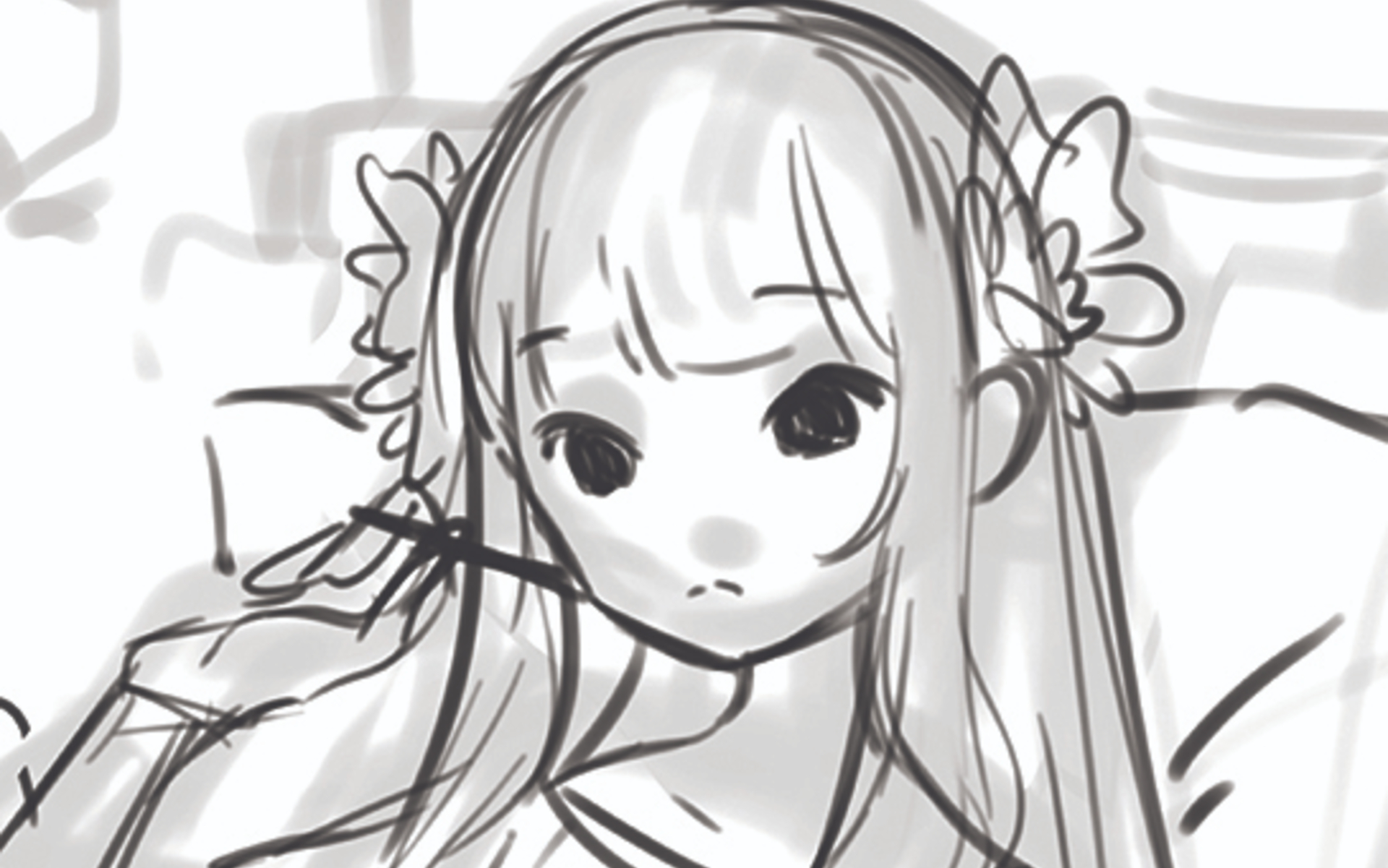
I tin can break down my process into sketch, line-art, colours and post-processing. Yet each of these steps can go complicated. By saying "don't rush the line-art" I don't mean draw slowly, but rather refine the sketch as many times equally it takes for the line-art to get easier to draw.
05. Relieve time using Prune Studio Paint'due south Smart Bucket tool
(Image: © Asia Ladowska)
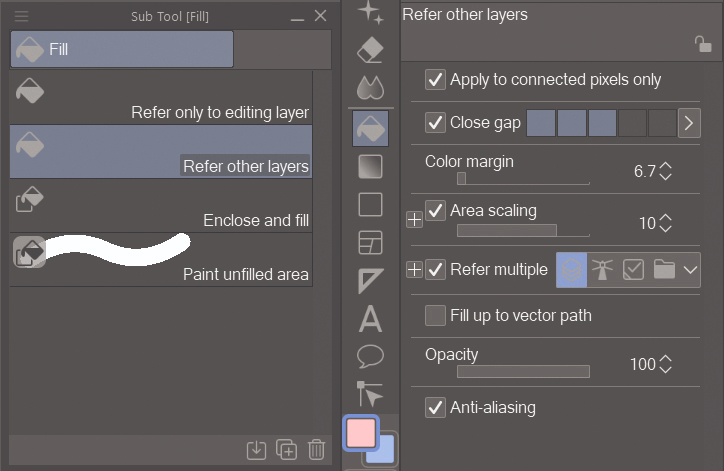
Before I knew Clip Studio Pigment, I used to waste material countless hours drawing flat layers manually. Luckily, you don't have to make that error! The software's Smart Bucket tool is very good at recognising line-art and with 1 click I can fill in most of the areas. If you lot play with its settings information technology tin identify lines that have gaps in them, or even textured lines. To make sure all the pixels in my graphic symbol are selected, I colour the background first on a divide layer. Then I switch off the line-art and colour the opposite on another layer.
06. Use a hard brush rather than a soft airbrush
(Image: © Asia Ladowska)
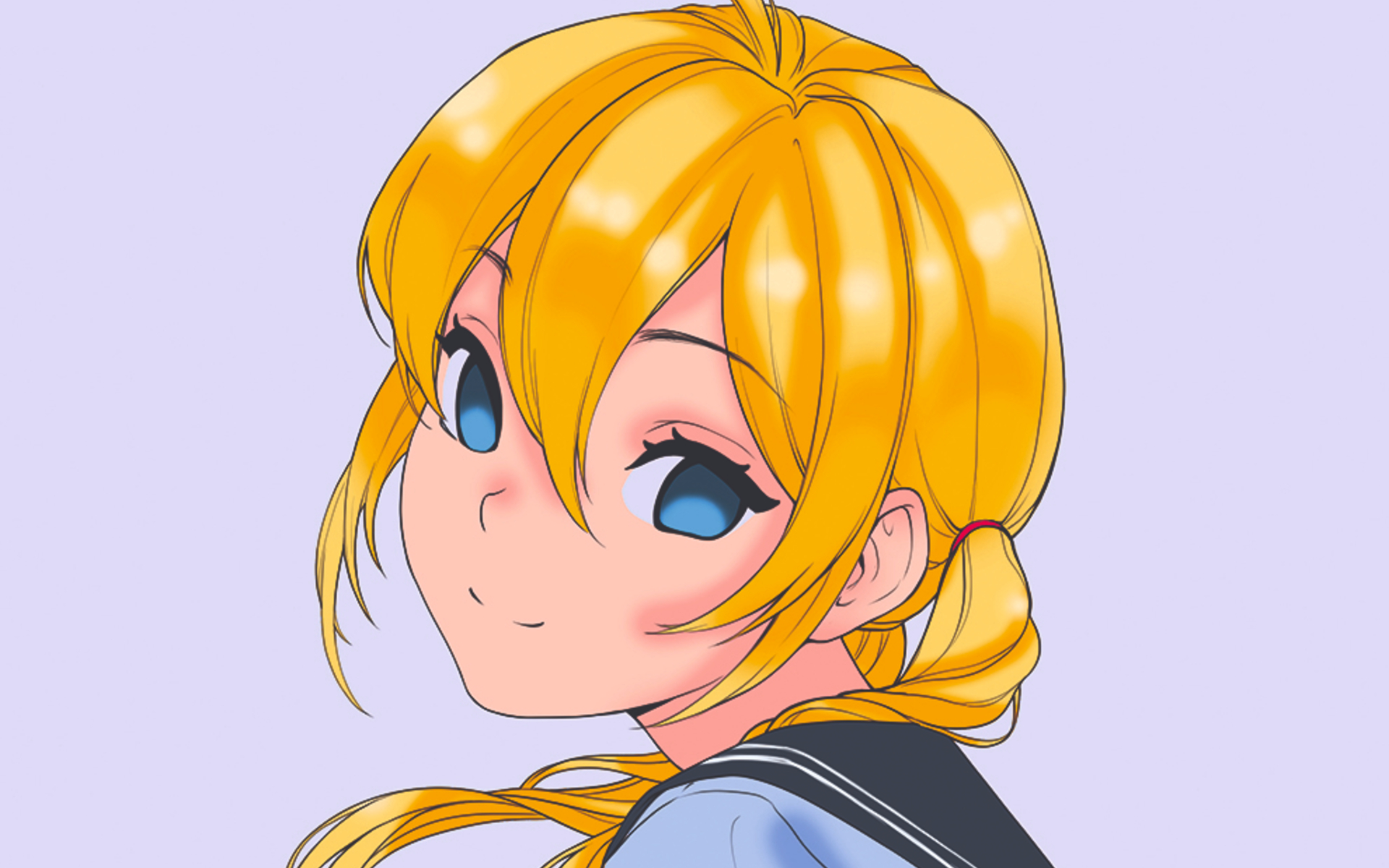
Adept drawings accept both soft and hard shadows in place, simply if you're not sure what and where they should go, cull the hard edge. Drawings look much ameliorate with flat prison cell shading (just look at all the anime ever made!) rather than mellow soft airbrush shading for everything. I ever use a hard castor start and and so blend selected edges into soft ones if necessary.
In this pace I've added some shading to all of the colour layers. Much similar artists who employ ambience occlusion, this shading doesn't define any lite source. Rather, it adds some depth to the character and makes her look more interesting. Allow me show you how I practise information technology in the next footstep.
07. Apply the Transparent Watercolor brush as a blender
(Image: © Asia Ladowska)
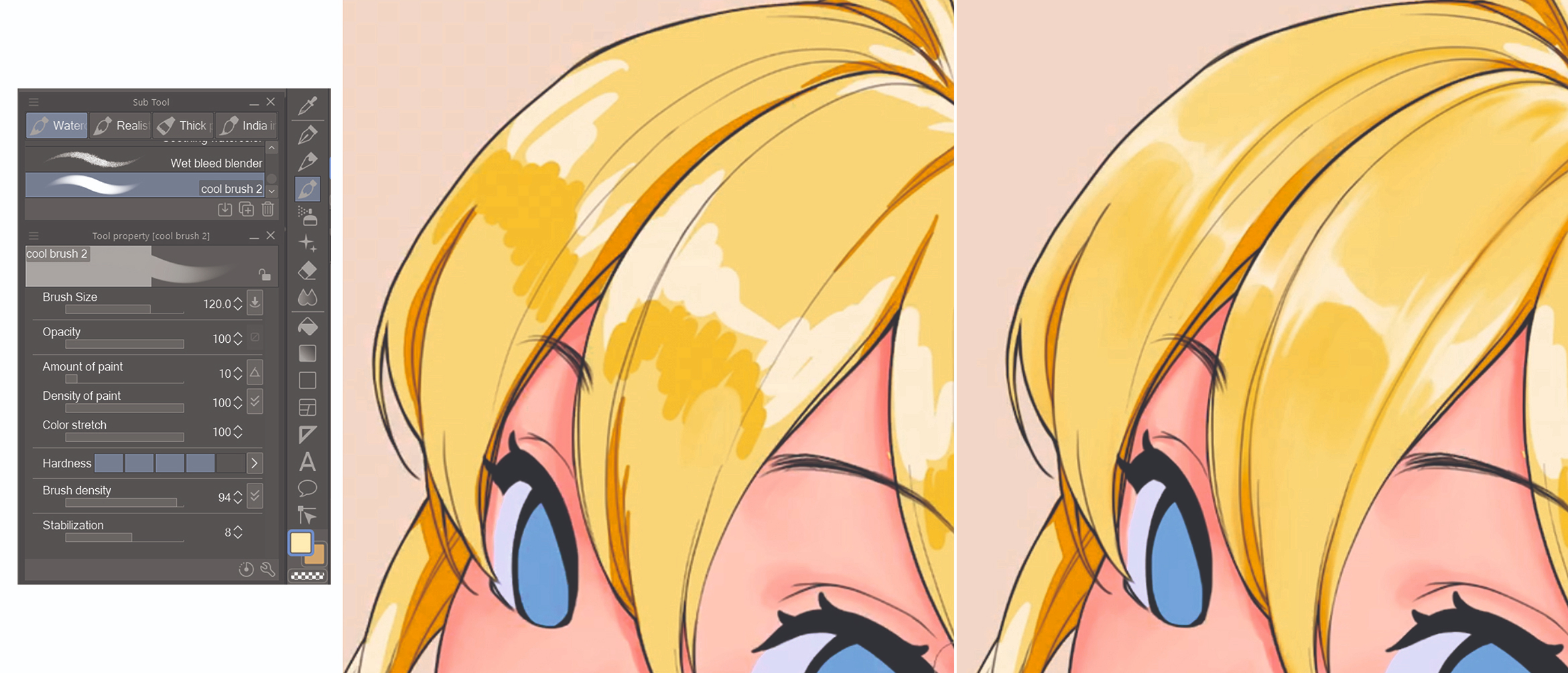
For me, a much more powerful tool than the Blending brush or any other pigment brush is the Transparent Watercolor default brush in Prune Studio Pigment. You can come across the settings I use in the screenshot, but I change them as I paint. If you set Amount of Paint to a low value, it blends the colours together, depending on the direction of your strokes and the pressure you lot put on your pen, and it doesn't thing what colour you lot've called for your brush. If you set that value to a high number, it'll blend the colour of your brush with the existing colours. This tool has so much versatility, and surprisingly the results doesn't even look like watercolours…
08. Adjust your line widths
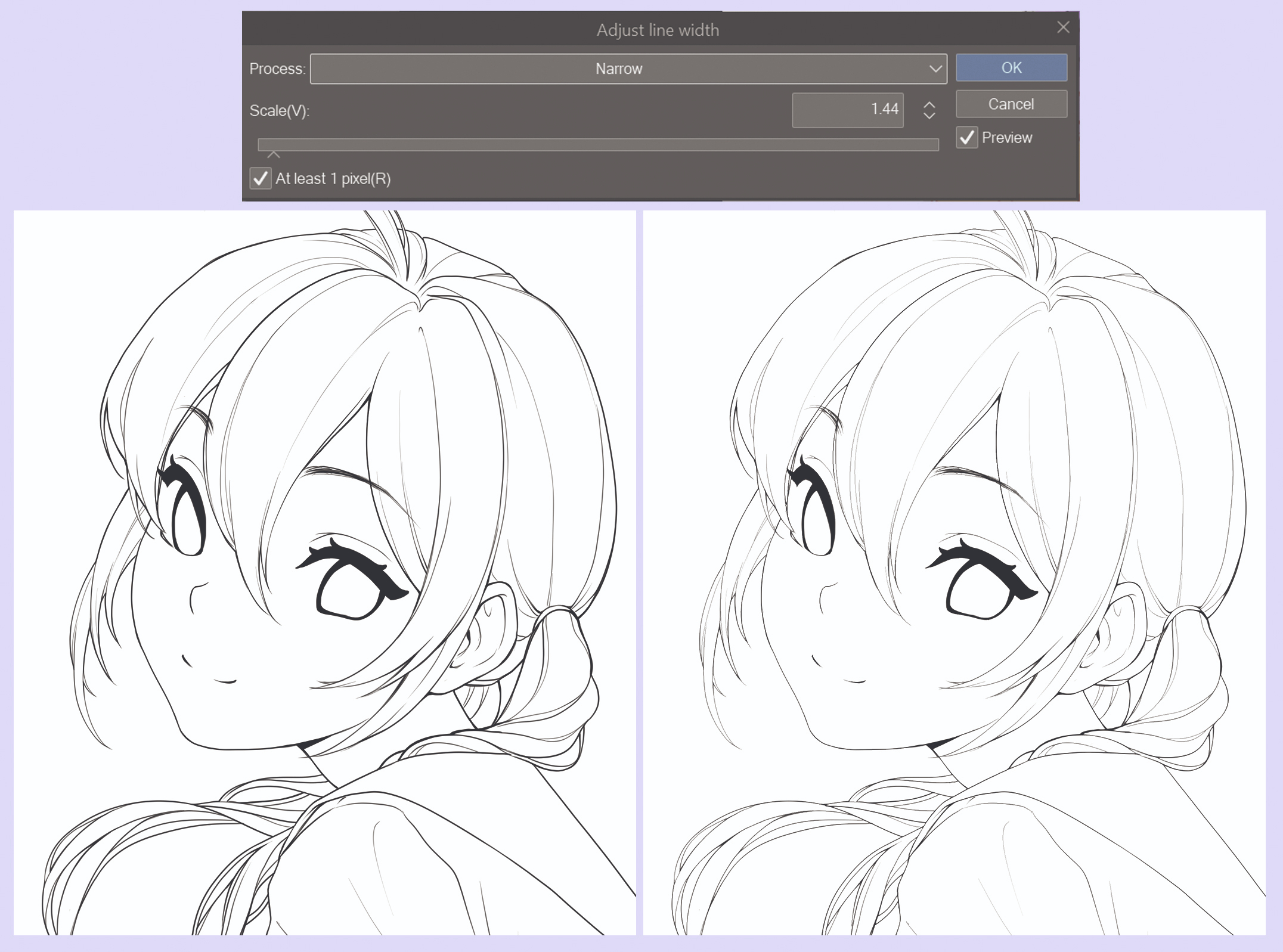
(Image: © Asia Ladowska)
Clip Studio Paint is made for painters, illustrators, animators and manga artists, and is packed with functions to help u.s. work faster and more than effectively. 1 of those functions that I can't live without is being able to suit line width. You can access it under Filters>Correct line>Adjust line width, and information technology enables you to thicken or narrow the line-art. On the left yous can come across the lines I drew originally, and on the right are my corrected lines. Thanks to this role my illustration became even more delicate. Still, if your art now looks rough and pixellated, I'd recommend duplicating the layer of edited line-art, blurring information technology a picayune with Filter>Blur>Gaussian Mistiness and setting the layer style to Multiply.
09. Experiment with colours
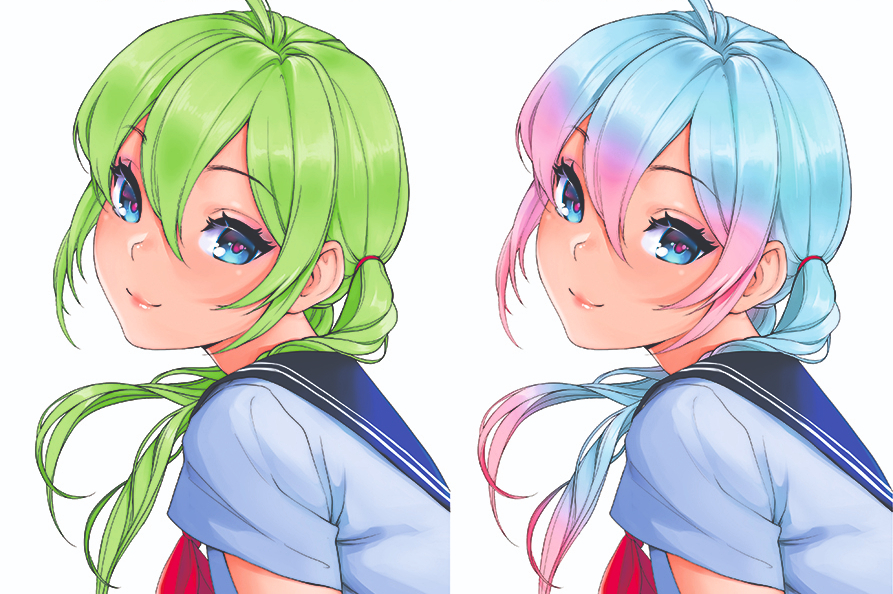
(Epitome: © Asia Ladowska)
I can never decide what colours to employ! I dear playing with colours and irresolute them to see 'what if…'. There are multiple ways y'all can practise it yourself. You tin can either select the coloured area in question (or apply information technology to a whole layer) and utilise Edit>Tonal Correction>Hue/Saturation/Brightness filter and suit the sliders, or clip a layer to the one yous're editing and gear up it to Color fashion, and then add colour with the Bucket tool. You tin too add new colours using functions such as Multiply, Color Dodge, Divide… you proper noun information technology! You can also mix colours and utilize gradients, besides.
10. Put a whole world into the eyes
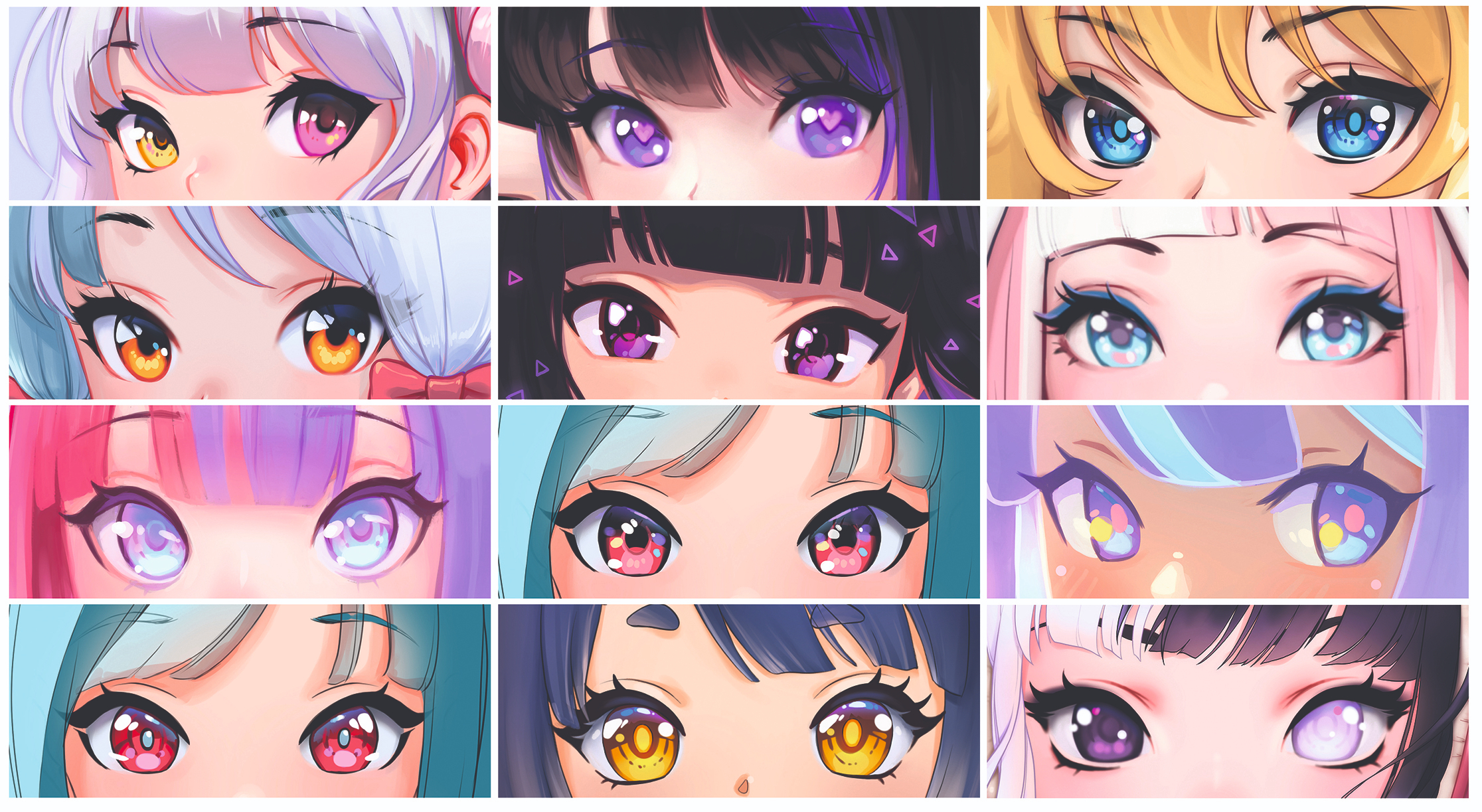
(Image: © Asia Ladowska)
I do believe that optics are the window to the soul and I pigment them with this in mind. I love painting eyes! It might actually be the eyes that made me fall in love with the manga style fine art. I endlessly experiment with how I pigment them, using a variety of styles, shapes and colours. I often take inspiration from other artists as well, and mix their styles with mine. I wonder if you tin run across my inspirations in my drawings.
11. Ascertain your light source and add shadows
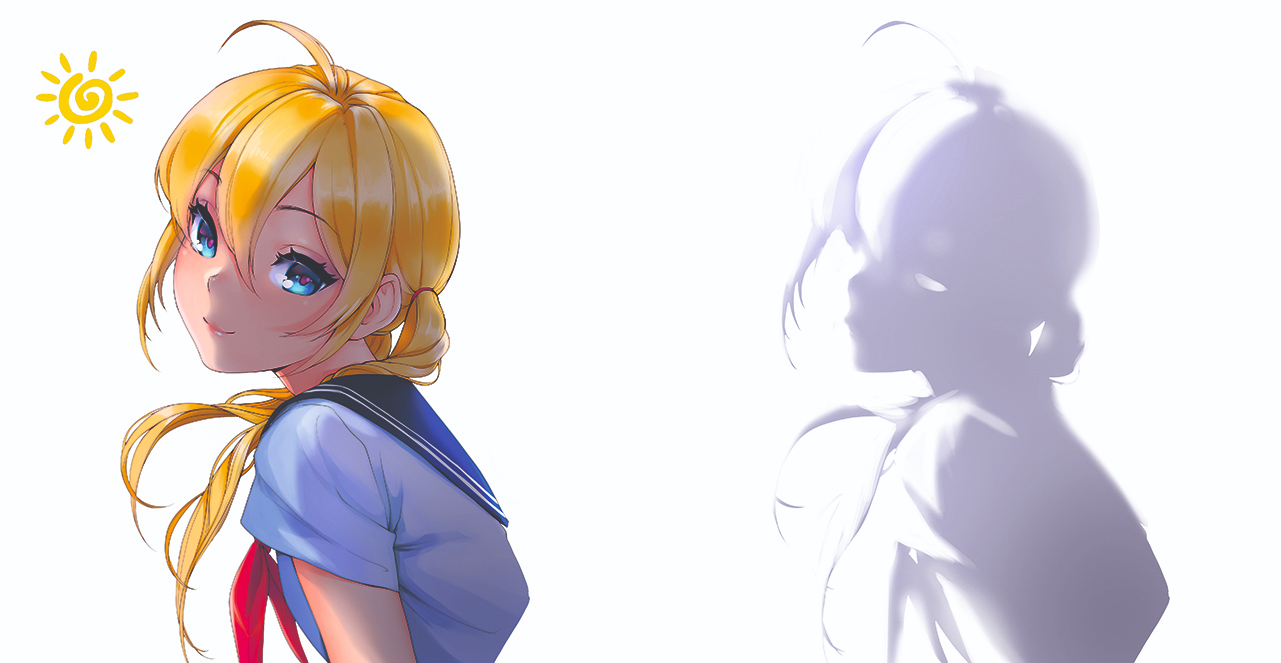
(Paradigm: © Asia Ladowska)
When creating a base for my shadows I outset past adding basic and delicate shading to my graphic symbol, without defining whatsoever calorie-free source. This stage adds depth to flat colours and creates a strong base for the actual shadow.
To paint flat shadows I imagine my calorie-free source, and then add together a layer fix to Multiply higher up the Color layers. Next, I paint a shadow with but 1 colour on this new layer. It's usually greyish imperial, but depending on what effect you desire to accomplish, y'all can use any colour.
I make my shadows glow by adding another layer to a higher place my earlier Multiply ane and prepare it to Color Dodge. Now with a soft brush I pigment the areas that I want to glow, using a colour that's low on value and high on saturation.
12. Ignore the rules and just paint
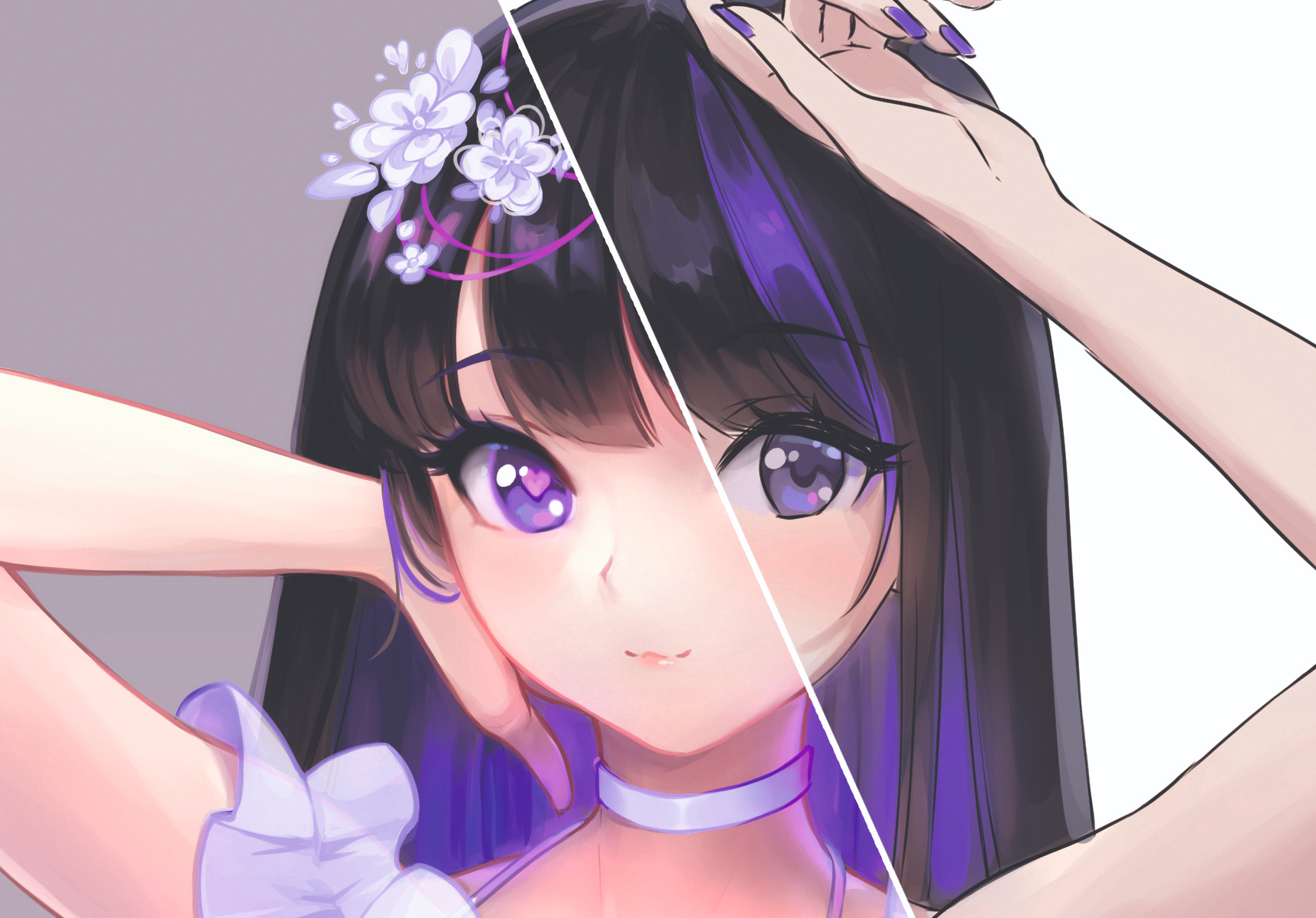
(Image: © Asia Ladowska)
Everything you lot've just read? Sometimes I don't want to practice any of it! To be honest, it's a lot to recall and think about when painting. When I just want to relax while creating art I get my illustrations as far as I can with a coloured sketch, and so add a layer on top of it (or sometimes not even that) and only pigment. My favourite tools here are the Darker Pencil and the multifunctional Transparent Watercolor Brush.
13. Utilize coloured reflections in your art
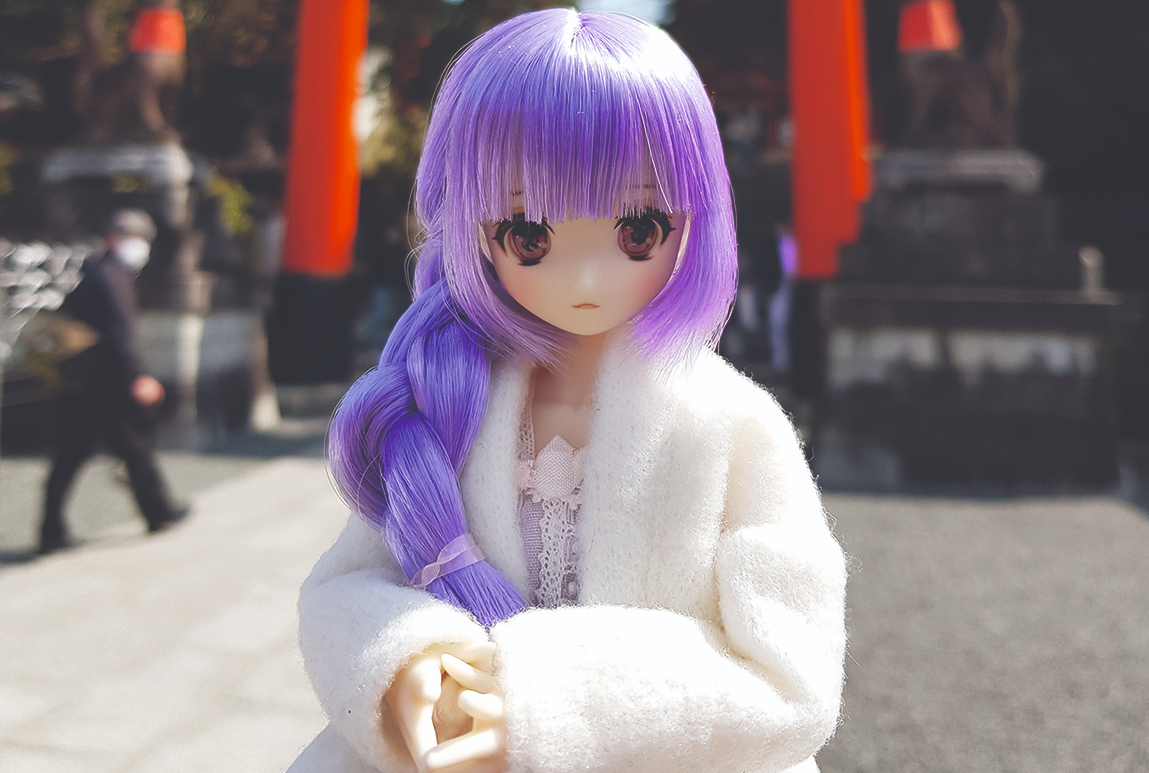
(Epitome: © Asia Ladowska)
Here'due south a cool technique to bring your illustrations to life: add reflected colours in the shadow areas or on the edges where different colours meet. Colours often reflect each other in nature. If the character is placed in an environment with strong cherry elements for example, red is probable to reflect in some darker colours . The aforementioned goes for the blue of the sky or greenish from the grass. In illustration it tin can be exaggerated; manga artists oftentimes use pare hue around the confront on clothes and hair to make the character'due south pare look soft, almost appearing to glow.
14. Don't experience you have to be astonishing at everything
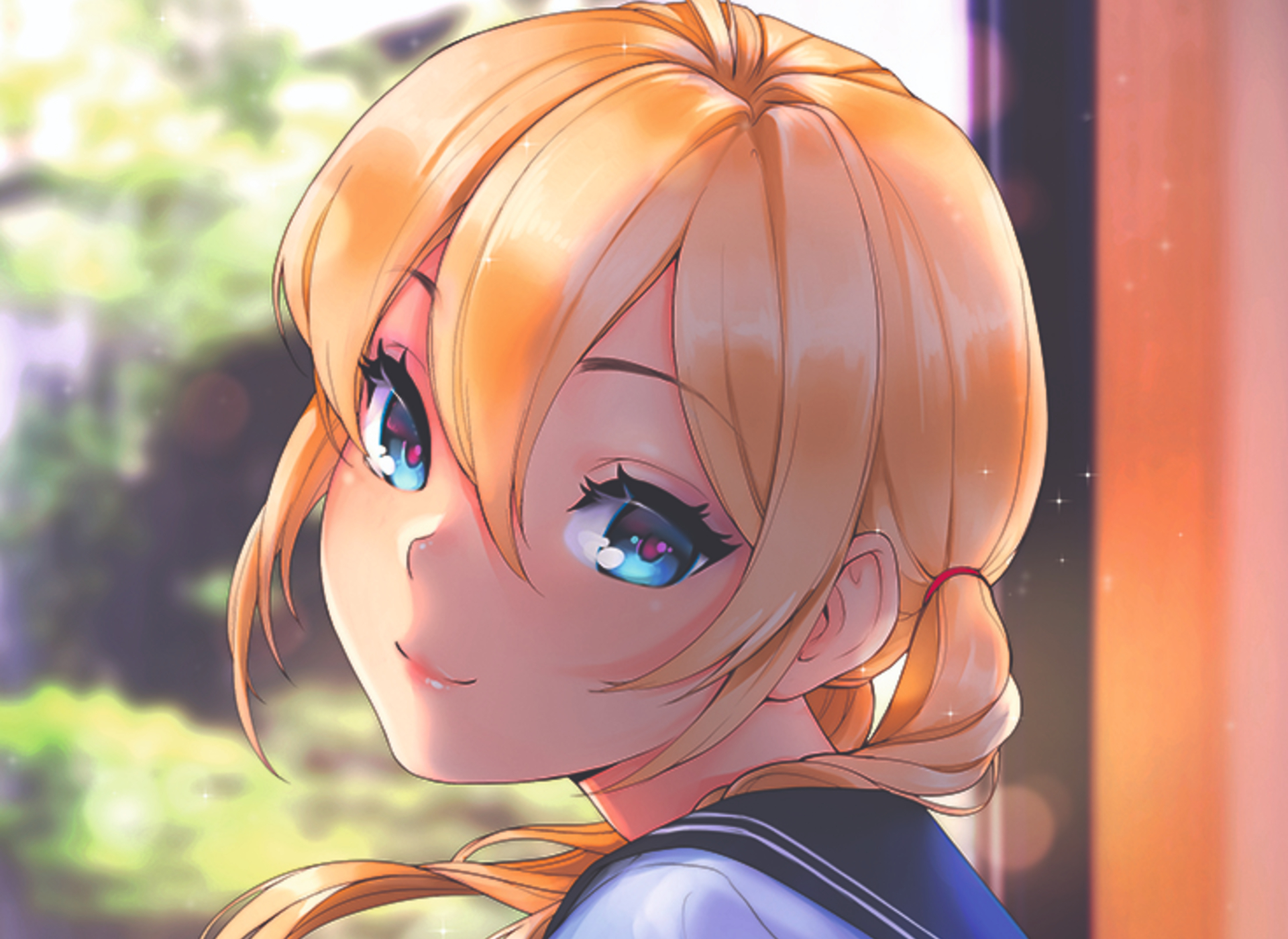
(Image: © Asia Ladowska)
I'm actually bad at cartoon backgrounds. I know that I'll go skillful at this when I get-go practising, but I haven't constitute the drive to do and then just yet. That doesn't hateful I can't create illustrations with backgrounds. I just need to be a petty more creative about the fact that I can't paint them! For this illustration I'm using photos I took myself and adjusting them using my photo-editing skills. I crop them, blur, brighten, overpaint and add effects to the point where it's not easy to tell that these are photos in the background.
fifteen. Know when to walk abroad

(Epitome: © Asia Ladowska)
Often I'll blast through the entire illustration procedure, then sit in front of the canvas calculation and deleting layers for hours, only to terminate upwards exactly where I started. Am I finished? Should I add more? Does it look good? Tin can it look better?
What helps me to walk abroad from the drawing (when I'k unable to grasp that I don't demand to create a masterpiece every time I depict) is my listing of things I can practice to help close the chapter. These steps are: adding a piddling more Color or Glow Dodge (like the bokeh lights y'all can see in the picture; adding a Color Residue Layer; and adding a signature. And unless I upload the drawing online it's likely that I'll come dorsum to information technology and waste more than fourth dimension. Posting online gives me closure. My social media platforms are a journal of my artistic journeying. A trip full of learning, discovering, creating and of grade, mistakes as well.
This commodity originally appeared in ImagineFX , the world's best-selling magazine for digital artists. Subscribe here .
Want some new software? Run into the deals nosotros've found below.
Related articles:
- Tips for cartoon manga faces
- Manga artists to pay attention to
- Analogy vs photography: how do y'all decide?
Related manufactures

Source: https://www.creativebloq.com/how-to/draw-manga
Posted by: blakeboarking.blogspot.com
0 Response to "How To Draw In Clip Studio Paint"
Post a Comment